
Virtual reality–assisted therapy has established itself as a promising approach in neurological rehabilitation in recent years. New, independent data from inpatient rehabilitation now confirm what earlier studies have already shown: patients also rate VR therapy with CUREO as effective, motivating, and goal-oriented within the context of aftercare.
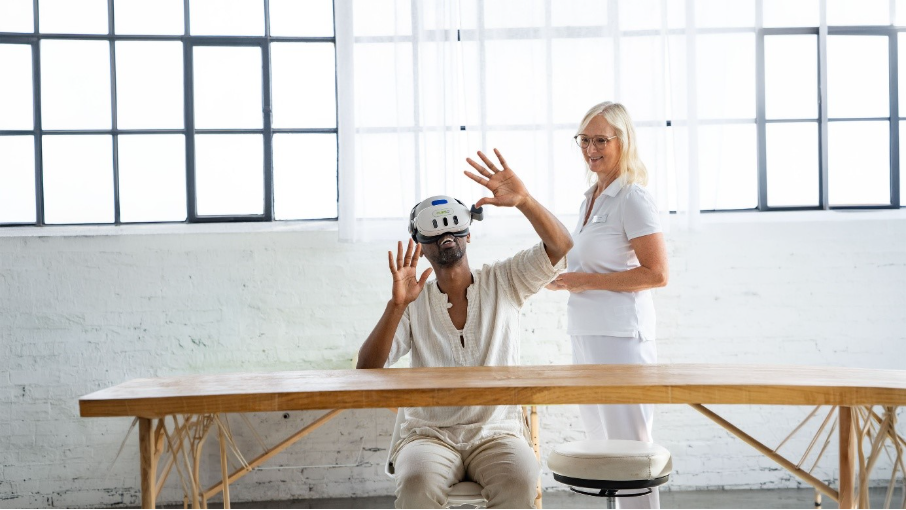
The results originate from a recent study conducted in the hand laboratory of the rehabilitation center Rehabilitationszentrum Gröbming and presented as a scientific poster at the 34th Reha-Kolloquium. They place existing evidence into a new clinical context and thereby strengthen the significance of earlier studies.
Especially in rehabilitation and aftercare, long-term therapy adherence is crucial. In addition to medical effectiveness, patient acceptance, motivation, and subjective well-being therefore play a central role. Virtual reality enables active patient engagement through interactive, gamified training environments and can thus meaningfully complement conventional therapy approaches.
That this approach also works in clinical routine was already demonstrated scientifically in 2022. In the publication by Stemick et al., 95% of patients reported a high level of enthusiasm for CUREO therapy, and 97% expressed a desire to repeat the VR sessions. The study thereby demonstrated the feasibility and acceptance of CUREO in neurological clinics and practices.
The current study builds precisely on this. As part of an inpatient rehabilitation program, VR training sessions with CUREO were integrated into the individual therapy program of the hand laboratory. A total of 45 patients with various diagnoses participated, including Parkinson’s disease, Huntington’s disease, shoulder conditions, neuromuscular disorders, and stroke. The age range was between 28 and 84 years. After each VR session, patients evaluated their experiences using standardized questionnaires. Among other aspects, satisfaction, well-being, perceived effectiveness, level of exertion compared to other forms of therapy, and desired frequency of use were assessed.
The results show a clear picture:

.png)
• Two-thirds of patients stated that they would like to use VR therapy daily or four to six times per week.
In addition, no relevant physical complaints were reported, and the use of the VR headset was rated as comfortable and easy. Acceptance was high regardless of age.
The current results from Rehabilitationszentrum Gröbming strengthen the existing body of evidence on VR-assisted therapy with CUREO (Stemick et al.). They show that virtual reality is not only technically feasible, but is also perceived by patients as effective, comfortable, and meaningful—even in inpatient aftercare.
The study thus highlights the potential of CUREO to make rehabilitation more sustainable, to enhance motivation, and to meaningfully expand therapy offerings, in alignment with previous scientific findings and clinical experience.
Source: Ziermann, U., Steiner, S., Thauerer, B., Mustak-Blagusz, M., & Steinecker-Frohnwieser, B. (2025). Anwendung von Virtual Reality (VR) in der digitalen Therapie - Vielfältige Einsatzmöglichkeiten in der Rehabilitation. 408-409. Abstract from 34. Rehabilitationswissenschaftliches Kolloquium, Nürnberg, Bavaria, Germany. https://www.deutsche-rentenversicherung.de/SharedDocs/Downloads/DE/Experten/reha_forschung/reha_kolloquium/TB-34Reha-Koll.pdf?__blob=publicationFile&v=3


